Ministerial meeting and national agricultural assessment report
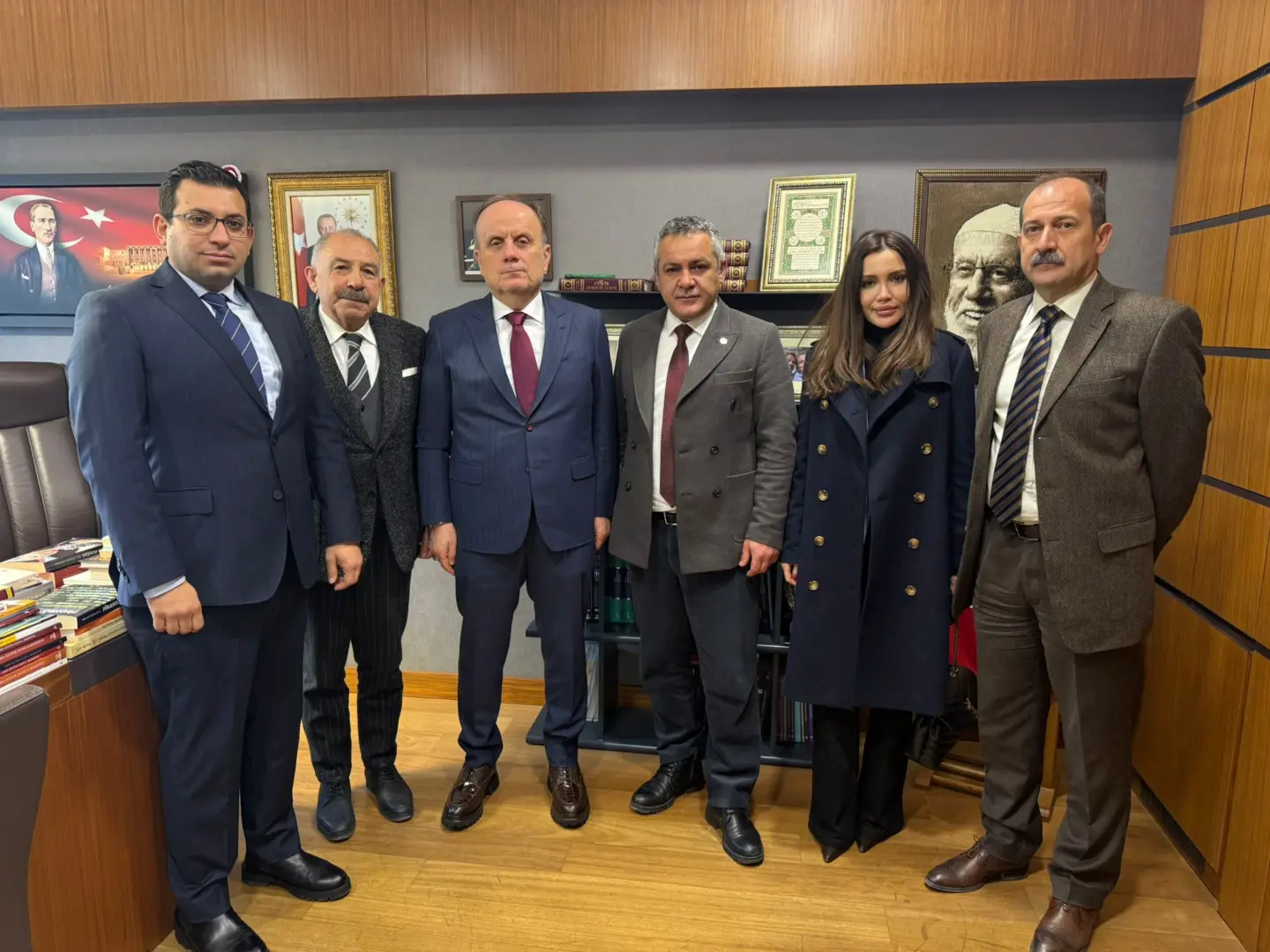
With the participation of Konya MP Mehmet Baykan, Member of the Agriculture and Rural Affairs Committee of the Grand National Assembly of Türkiye (TBMM),
our Deputy Chair of the Executive Board Bekir Aşıkbekiroğlu,
our Executive Board Member İlker Muammer Yaşar
and our Adana-based Çukurova Basin Agricultural Advocates,
a meeting was held with İbrahim Yumaklı, at which the current status of the work carried out within the scope of the High Value-Added Products Production Centre and field-based assessments of agricultural planning, harvesting and marketing processes at the national level were discussed.
I. Purpose and scope of the meeting
In this context, at the meeting,
The founding vision of the High Value-Added Products Production Centre,
The ongoing preparation and planning processes in the field,
Priority product groups, technology and infrastructure needs,
R&D, quality standardisation, traceability and efficiency-enhancing components,
Producer outreach, dissemination, and monitoring and evaluation mechanisms
were addressed within a holistic framework.
II. National agricultural assessment: a common framework
The field data and analyses presented at the meeting clearly demonstrated that agricultural production is not limited to the sowing and harvesting stages, and that sustainability is not possible unless planning, marketing, climate adaptation and policy coherence are ensured.
A comparative analysis of producer experiences from different basins showed that regional problems point to common structural vulnerabilities across the country. Accordingly, the approach of the International Confederation of Agriculture and Food (TARIMKON) rests on
Field-based data generation,
Rights-based policy advocacy,
Climate-sensitive production and harvest planning,
Addressing the production–harvest–marketing chain as a whole
as its founding principles.
III. Advocacy and rights-based agricultural policies
The meeting emphasised that, instead of relying on temporary support, agricultural policies should be given a permanent and predictable structure that safeguards producers' rights.
According to the findings reported from the field,
Production decisions are largely made under market uncertainty,
Protective and stabilising mechanisms are not sufficiently activated during the harvest period,
Producers' bargaining power remains weak at the marketing stage.
For this reason, advocacy was considered not merely as a structure that conveys demands, but as an institutional feedback mechanism through which verifiable field data are systematically brought into decision-making processes.
IV. Climate change, planning and harvest processes
It was stated that the effects of climate change are no longer merely a foreseeable risk, but have become the main factor directly determining production and harvest decisions.
The most prominent effects at the national level
Seasonal shifts,
Extreme temperatures,
Irregular rainfall and drought.
In this context, a consensus emerged that production and harvest plans that do not take climate data into account are economically and socially unsustainable.
V. High Value-Added Products Production Centre and roadmap
At the meeting, within the framework of the integrated value chain approach extending from production to market, which is the centre's core objective,
Priority product groups,
Technology and infrastructure investments,
R&D and quality standardisation,
Traceability and efficiency-enhancing technical components
were presented to the Minister.
The contributions the centre will make in terms of regional development, export capacity, producer organisation and employment were evaluated.
VI. Shared views and conclusion
At the end of the meeting,
Designing the Agricultural Advocacy approach as an implementation layer that inspires confidence in the field and is measurable and results-oriented,
Strengthening monitoring and evaluation mechanisms with common indicators,
Advancing the process with a clear timeline, verifiable targets and measurable outputs
were confirmed as matters of shared commitment.
In line with the Minister's assessments, it was agreed to continue work on developing this field-based, data-driven and rights-based approach in alignment with the Ministry's policies.