Location: İzmir
This report has been prepared to systematically compile the findings on policy monitoring and field activities carried out in the pilot province of İzmir under the “Precision Farming for a Greener Tomorrow: Advocating for Sustainable Agriculture” project, supported by the European Union. The project aims to scale up sustainable and precision farming practices, strengthen advocacy and monitoring capacity, and establish a continuous, field-oriented learning and improvement cycle through pilot implementations.
A mixed-methods approach was adopted in the study. First, a desk analysis was conducted using official statistics, institutional reports and relevant legislation; farmers’ views were then compiled thematically at the policy monitoring meeting held in İzmir. Through the structure of the Agriculture Council of Farmers established under the project, monitoring inputs from the farmer representatives of each pilot province were collected regularly and field observations were systematised. Finally, in assessments carried out together with producers during field visits, parcel-level implementation errors, yield loss risks and improvement needs were examined on site; findings were defined on a process- and data-based footing rather than with reference to individuals or institutions. Action steps applicable in the short and medium term were developed for each finding.
Analysis of the agricultural structure and potential of İzmir province
1.Agricultural structure
1.1. General information about the province
İzmir is Türkiye’s third most populous province, with a population of approximately 4.4 million. Located in the west of the Aegean Region, the province is bordered by the Madra Mountains to the north, the Gulf of Kuşadası to the south, the Çeşme Peninsula to the west and the provinces of Manisa and Aydın to the east.
Table 1. General Information on İzmir Province
Source: Turkish Statistical Institute (TÜİK) 2024, * Ministry of Agriculture and Forestry, Farmer Registration System (ÇKS) data, 2025 production year
Agricultural production infrastructure of the province
River basins: Gediz Basin and Küçük Menderes Basin
Coastline length: ~629 km
Agricultural land: ~350 thousand ha (approximately)
Share of irrigable land: 40%+
Climate: Mediterranean climate
Average temperature: 17–18°C
Precipitation: 650–700 mm/year
These conditions make diversified production possible in crop farming, livestock and fisheries.
2. Agricultural production profile
In the 2021–2024 period, İzmir stands out for productivity-driven growth in fruit, an increase in vegetables supported by the expansion of cultivated area, and a weakening in field crops characterised by declining yields. This picture shows that water management, climate resilience and yield-enhancing practices (precision farming, correct fertilisation, appropriate tillage, crop pattern optimisation) are of critical importance, particularly for the field crops group.
İzmir is a major producer in Türkiye
Olives and olive oil
Grapes (seedless raisin exports)
Tobacco
Cotton
Vegetables and fruit (tomatoes, peppers, citrus, figs)
Greenhouse production (especially the Küçük Menderes basin)
2.1 Production Pattern and Provincial Specialisation
Across the product groups examined, İzmir province shows a clear production weighting towards horticultural crops (fruit and vegetables). Its shares of Türkiye’s total production indicate that the province’s agricultural competitive advantage is concentrated particularly in fruit and vegetable products with high value-added potential. This points to a specialisation consistent with İzmir’s climatic conditions, market access opportunities and agro-industrial infrastructure.
2.2 Field Crops: Selective Areas of Strength, Generally Low National Share
Among selected field crops, İzmir’s share of Türkiye’s production is limited for staple cereals such as wheat (0.85%), grain maize (0.75%) and barley (1.15%). By contrast, its share rises markedly for cotton (seed cotton) (7.11%) and potatoes (6.94%). This finding shows that, in field crop production, İzmir has a (selective) production structure concentrated in specific crops rather than being a general cereal-producing centre.
2.3 Fruit Products: Strong Position in High-Share Products
Data on selected fruit products show that İzmir’s share of Türkiye’s production is particularly high for figs (22.07%), satsuma mandarins (20.67%) and olives for oil (17.92%). There is also a notable share in cherry production (13.69%). These indicators suggest that İzmir has strategic production capacity in products for both the domestic market and export, and that it supports a strong agricultural ecosystem in terms of quality, standardisation and marketing capability.
2.4 Vegetable Products: High National Representation and Market Strength
Among selected vegetables, İzmir’s share of Türkiye’s production is very high for cucumbers for pickling (29.25%) and spinach (23.15%). Tomatoes for paste (14.12%) reflect İzmir’s strong production capacity among products that supply raw materials to industry. Although the share of peppers for paste (4.07%) is more limited, it is considered supportive in terms of the processing industry and the supply chain. This structure shows that İzmir has a high degree of representation nationwide in vegetable production, in terms of both production scale and market integration.
3.İzmir, July 2025: Meteorological Situation and Agricultural Risk Assessment
Period: July 2025
Context: 2025 Water Year (1 October 2024 – 31 July 2025)
3.1. General Situation
In July 2025, average precipitation across Türkiye was 9.6 mm. Compared with the 1991–2020 normal (15.6 mm), this value remained at 39% of the normal, and it was 71% lower than the July 2024 precipitation (32.7 mm). The average number of rainy days across Türkiye was 2.8, below the normal value (3.2 days).
3.2. İzmir-Focused Findings
Across the Aegean Region (excluding the Uşak–Afyonkarahisar–Denizli area), July precipitation is reported to have fallen by more than 80% compared with the normal. This situation intensified meteorological drought conditions in İzmir.
It was stated that the number of rainy days fell to as low as 1 day in places around Manisa and İzmir. This is an indicator that increases soil moisture loss and deepens water stress in plants.
According to the regional assessment, although harvesting had been completed in July, a drought risk due to insufficient precipitation and high temperatures was reported in the provinces of Muğla, Manisa and İzmir.
3.3. 2025 Water Year Context
In the 2025 water year (1 October 2024–31 July 2025), average precipitation across Türkiye was 393.2 mm; this was 26% below the water year normal (533.7 mm) and 28% below the precipitation for the same period of the previous year (549.3 mm). It was reported that precipitation over the 10-month water year fell to its lowest level in the last 52 years. This cumulative precipitation deficit is one of the main factors increasing irrigation water demand and production pressure in İzmir during the summer.
3.4. Agricultural Impacts
Drought risk: The combination of low precipitation and high temperatures increases the risk of yield and quality losses, particularly in irrigation-dependent production.
Agricultural frost impact: Yield losses are expected in orchards and vineyards as a result of the agricultural frost disaster that occurred in April. Given İzmir’s fruit/vineyard production pattern, this risk is critical for production outputs.
Disease and pest pressure: Control activities are reported to be continuing in orchards and vineyards; increased plant stress under dry and hot conditions raises the need for disease/pest management.
Fire risk: It was stated that the fires in July damaged agricultural land. In İzmir, this should be treated as a secondary but high-impact risk during the summer.
3.5. Conclusion
Current indicators show that meteorological drought conditions became pronounced in İzmir in July 2025 due to insufficient precipitation, high temperatures and a low number of rainy days, and that the precipitation deficit accumulated over the 2025 water year means the risk should be assessed as cumulative rather than seasonal. In addition, potential yield losses caused by the April frost are a significant factor that could pull down seasonal performance, particularly in fruit and grape production.
Agricultural production and water management in İzmir are determined by basin-scale water budget and water allocation dynamics, primarily in the Gediz and Küçük Menderes basins. The Drought Management Plans prepared for these basins aim to reveal the impact of climate change on basin systems through analyses based on climate projections, to assess the current and projected water supply–demand balance, and to define preventive/adaptive measures to combat drought. Within the official framework on irrigation infrastructure, data from the State Hydraulic Works (DSİ) 2nd Regional Directorate show that part of the irrigable land within the province’s agricultural land potential is actually irrigated, while the remainder is at the investment, programme or project stage. This confirms the need to increase irrigation efficiency and strengthen water allocation management in the face of growing water pressure under climate change. As regards urban water supply, the regular publication by İZSU of up-to-date fill rate and water volume indicators for İzmir’s dam system provides an important data basis for monitoring the volatility of water supply during dry periods and for supporting decision-making processes with evidence. In this context, as warming and evaporation increase, agricultural water demand is expected to rise and irrigation demand to peak in the summer months; this trend increases the pressure on inter-sectoral water allocation during dry periods. İzmir’s water management cannot be reduced to the local precipitation regime alone; it requires a holistic planning approach that encompasses basin-scale drought sensitivity as well as inter-basin water transfers and allocation mechanisms. Accordingly, the priority agenda for climate change adaptation is considered to be increasing irrigation efficiency, reinforcing allocation discipline, strengthening groundwater management, developing early warning and monitoring capacity for climate risks, and scaling up planning focused on crop patterns and the water footprint.
3.6. Proposed Focus Areas
Irrigation planning and water efficiency: smart irrigation, reduction of water losses and leaks, field-level monitoring
Climate risk management: frost/drought early warning, wider uptake of insurance, resilient varieties and cultivation techniques
Production continuity: quality and traceability in horticultural crops, disease/pest management plan
Disaster impacts: fire risk reduction and protection of agricultural land
4. Support and loans
4.1. Rural Development Investment Support Programme (KKYDP) (2021-2025)
Implementing institution: Ministry of Agriculture and Forestry / General Directorate of Agrarian Reform. Legislation:
1- Presidential Decision; the Decision on Supporting Agriculture-Based Economic Investments and Rural Economic Infrastructure Investments under Rural Development Support, put into effect under Article 19 of Agriculture Law No. 5488 dated 18.4.2006 and by Presidential Decision No. 2800 dated 27.7.2020
2- Communiqué; Communiqué on Supporting Agriculture-Based Investments under Rural Development Support (Communiqué No: 2024/43)
The purpose of implementing the KKYDP is to support projects that increase and diversify producer incomes, incorporate new technology, and are based on the development and expansion of agriculture-based small and medium-sized industry. Within this scope, 50% of the eligible project amount is provided as grant support. The project budget is prepared excluding VAT (value added tax).
It covers matters relating to grant payments for investments by natural and legal persons in agriculture-based economic activities, with priority given to women, young entrepreneurs, agricultural organisations and investors to be located in OTBs.
4.2 Ministry agricultural support payments
4.2.1 Crop production support (2025–2027)
A) Legislation and legal basis
Presidential Decision (No. 8859): the framework for support for crop production and certain other agricultural support in the 2025–2027 period. (
Communiqué (No: 2024/39): entered into force upon publication in Official Gazette No. 32769 (5th Repeated Issue) dated 31 December 2024; it sets out the implementation principles.
B) General principles
To benefit from the support, registration in the Ministry’s registration systems (e.g. ÇKS, etc.) in the relevant production year is required.
For Basic / Planned Production / Production Development support, the amount is calculated as “support coefficient value × support coefficient”.
Support coefficient value for the 2025 production year: 244 TL/da (updated annually).
4.2.2 Basic support
Basic support is designed to cover 50% of diesel costs and 25% of fertiliser costs.
Table 10. Basic Support Categories (2025 – coefficient value 244 TL/da)
4.2.3 Planned production support
It is paid in addition to basic support to farmers who grow products covered by planned production in the announced basins; in this way, 100% of diesel and 50% of fertiliser costs are covered under planned production. The list of products covered by planned production includes barley, safflower, sunflower (oilseed), wheat, canola, dry beans, lentils, maize (grain), chickpeas, cotton (seed cotton), potatoes, dry onions, soybeans and forage crops.
Table 11. Planned Production Support (2025)
Implementation notes
For seed cotton, documents such as an invoice for domestically produced and certified seed and a copy of the certificate are required; the communiqué also sets out date ranges and technical conditions.
In provinces designated as dairy basins, an additional rate of planned production support is applied for forage crop producers.
4.2.3 Groundwater restriction support
In basins where a groundwater restriction has been declared, “Groundwater Restriction Support” is paid for designated products in addition to Basic + Planned support.
Table 12. Groundwater Restriction Support (2025)
Production Development Support
Certified seed use support (2025)
Domestic and national certified seed (additional) – 2025
An additional payment is made with a coefficient of 0.60 for sunflower (oilseed), maize (grain) and cotton (seed cotton), and with a coefficient of 1.00 for potatoes.
4.2.4 Certified/standard sapling use support (2025)
4.2.5 Organic farming support (2025)
Good Agricultural Practices (İTU) support (2025)
4.3 Solid organic / organomineral fertiliser support (2025)
Coefficient: 0.21 → 51.24 TL/da
4.4 Biological and biotechnical control (2025)
Protected cultivation package support: 3,825 TL/da
Open-field package support: 1,305 TL/da
4.5 Potato wart support (2025)
200 TL/da for alternative crops/fallow as part of quarantine measures (within the framework of the communiqué/decision).
4.6 Rent support for products stored in licensed warehouses
Rent support is paid to producers/producer organisations registered in the ÇKS for wheat, barley, rye, oats, maize, paddy/rice, lentils, chickpeas, beans, sunflower, soybeans, cotton, hazelnuts, dried apricots, pistachios, raisins, olives and olive oil.
Rent fees are based on the Ministry of Trade’s tariff prices; the communiqué also sets out the storage period, the maximum duration (up to 6 months), application and “first depositor” conditions.
Ministry announcements state that rent support will be paid at 75% of the tariff.
4.7 ÇMVA (Farm Accountancy Data Network) participation premium (2025)
Payment is made to holdings that sign a ÇMVA participation agreement and share their data for one accounting year.
The amount for 2025 has been announced as 1,500 TL.
4.8 Agricultural extension and advisory support (TYDD) (2025)
Support is paid to authorised persons/organisations per agricultural advisor (subject to 12 months of service); payment is made for a maximum of 5 advisors per organisation; payments are made in two instalments (May/November).
The annual advisory support amount for 2025 has been announced as 294,000 TL.
In İzmir, these support schemes are implemented on the basis of product–basin matching (basin crop pattern) and the ÇKS/TBS records of production areas. Therefore, when assessing the scope of “planned production” specifically for İzmir, it is essential to match the relevant district/basin against the list annexed to the Decision (basin boundaries such as Gediz–Küçük Menderes) and to check production declarations accordingly.
5. Project findings and field observations
The “Sustainable Harvest” project, officially titled “Precision Farming for a Greener Tomorrow: Advocating for Sustainable Agriculture”, is an initiative funded under the EU Green Deal Civil Society Action and implemented under project number IPAIII/2023/451-911. The project’s implementation period is 26.12.2023–26.12.2026, and activities have been planned and are being implemented simultaneously in the provinces of Ankara, Adana, İzmir, Sakarya and Şanlıurfa. Under the project, the Agriculture Council of Farmers was established to strengthen the monitoring and feedback mechanism in the pilot provinces. The Council includes one farmer representative for each pilot province; these representatives are responsible for following up on implementation in their provinces, compiling field observations and ensuring the flow of data into policy monitoring processes. Indeed, the findings of the work carried out on harvesting, marketing and planning were supported by information regularly relayed from the field by Council members and by monitoring outputs, so that the assessments were grounded not only in statements but in a process- and data-based monitoring framework. The project aims to scale up sustainable and precision farming practices, strengthen advocacy and monitoring capacity, and establish a field-oriented learning and improvement cycle through pilot implementations. Within the partnership structure, the International Confederation of Agriculture and Food (TARIMKON) is one of the lead/core stakeholders, while the Green Development Association and VERDE – Center for Research, Innovation and Sustainable Development are among the cooperation partners.
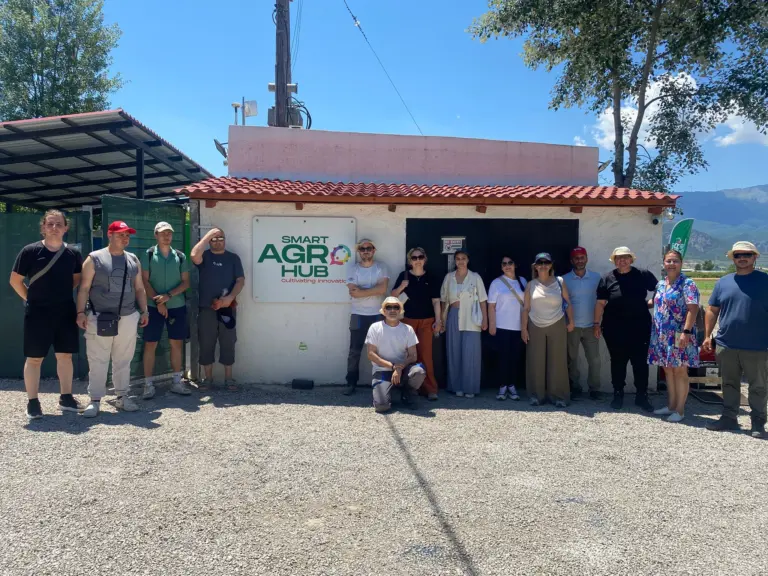
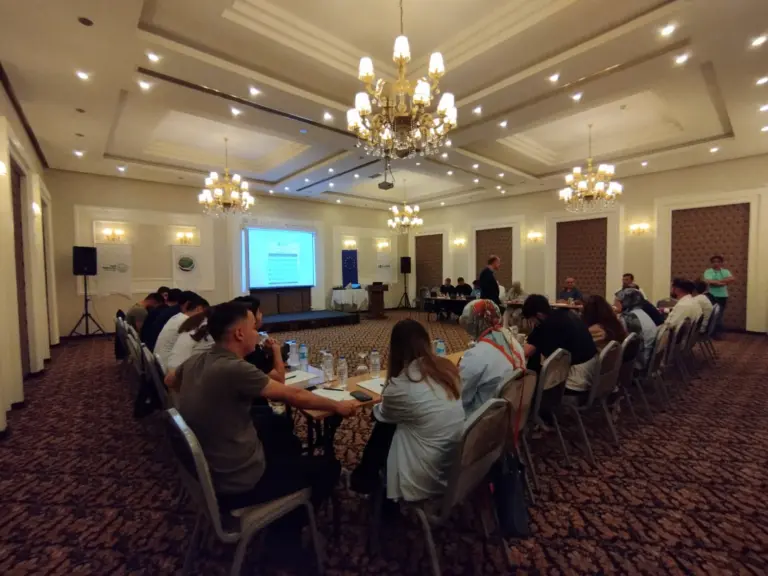
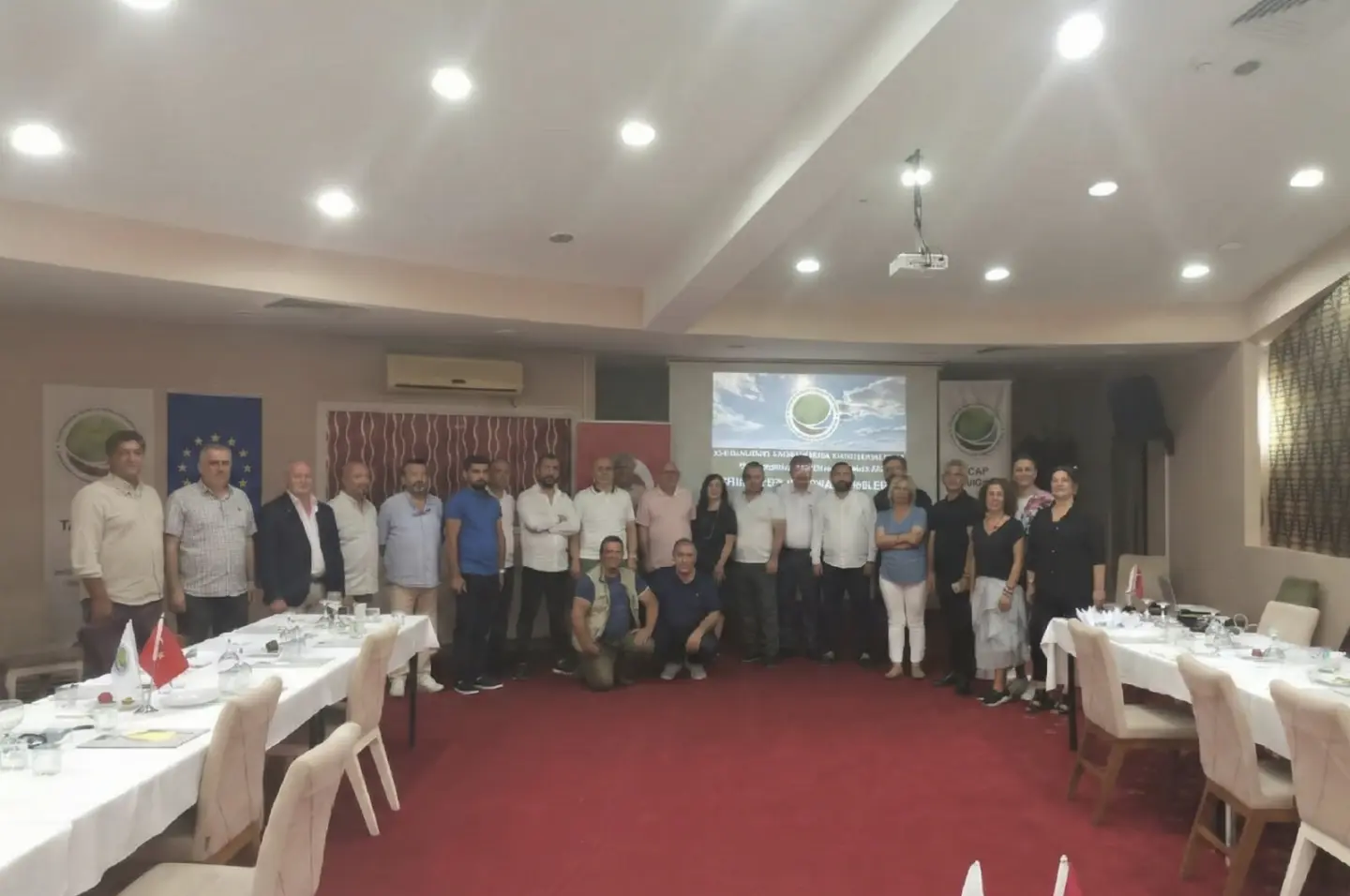
In light of the Policy Monitoring Meeting held in İzmir, the monitoring documents shared at the meeting and the set of information compiled from the field, farmers’ views were gathered systematically; the subsequent field visits aimed to make visible, together with producers, parcel-level implementation errors and the critical points at which these turn into yield losses. Field observations were addressed under the headings of improving the irrigation schedule, redesigning the fertilisation plan according to land/soil conditions and standardising early warning and observation routines, and were linked directly to on-farm practices. In line with the agricultural advocacy approach, findings were described on the basis of processes and data rather than individuals or institutions; an actionable improvement step (short/medium term) was defined for each finding.
Farmers’ views and field findings were consolidated under the following main question themes:
Irrigation and water efficiency: Decisions on irrigation timing/intensity, water losses, barriers to switching to pressurised irrigation, water stress management during critical phenological stages.
Soil health and fertilisation: Frequency of soil analysis, parcel heterogeneity, fertilisation timing, organic matter/soil amendment applications.
Plant health and early warning: Disease and pest monitoring, meteorological stress indicators, standards for observation records, threshold-based intervention.
Parcel-level implementation errors: Sowing/planting density, mismatch between irrigation and fertilisation, machinery/equipment calibration, repeated applications and losses.
Data collection and decision support: Simple field records, use of sensors/apps, data sharing and training needs.
Cost, access and capacity: Input costs, access to finance, need for shared use/cooperative organisation, access to technical advisory services.