
The agricultural sector plays a strategic role in areas vital to humanity, such as food security, rural development and the environment. The development of the agricultural sector is essential for ensuring the security of our food supply, improving the welfare of the rural population, protecting the environment and combating climate change.
Unfortunately, the agricultural sector is grappling with many problems today. The most important of these is the lack of a sufficient and qualified workforce to work in the fields. This adversely affects both production efficiency and producers' income.
Our farmers and agricultural enterprises who wish to produce are struggling to find workers to employ in the fields. This problem is growing day by day and putting the future of the agricultural sector at risk.
The way to overcome this problem is to invest in high-tech harvest mechanisation in agriculture. This means using smart machines that automatically recognise, cut, gather and transport crops.
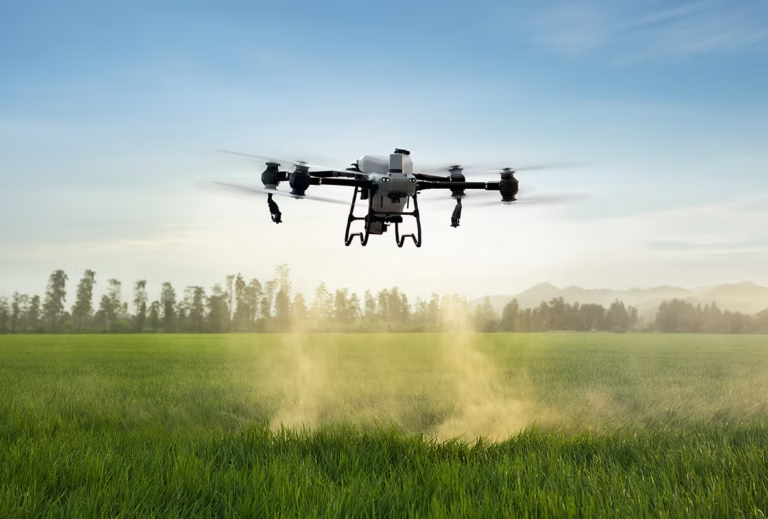
Using technologies such as sensors, cameras, artificial intelligence, satellites and drones, these machines can detect field conditions, plant health, disease and pest risks, and harvest timing and quantity. In this way, they provide many advantages in agriculture, such as efficiency, quality, savings, sustainability and competitiveness.
The only way to reap these advantages is to establish AGRICULTURAL TECHNOPARKS AND INNOVATION CENTRES IN ORGANISED INDUSTRIAL ZONES AND UNIVERSITIES as soon as possible.
We believe that our people, who have made proud progress in the defence industry in a short time, can do even better in agriculture.
We must not forget that, without ensuring food supply security, a country will soon face an inevitable end, no matter in which field it develops. A country that cannot feed itself cannot survive or preserve its freedom, no matter how many weapons or how much technology it possesses.
What is high-tech harvest mechanisation in agriculture and how does it work?
High-tech harvest mechanisation in agriculture is the use of smart machines that automatically recognise, cut, gather and transport crops. Using technologies such as sensors, cameras, artificial intelligence, satellites and drones, these machines can determine field conditions, plant health, disease and pest risks, and harvest timing and quantity. This delivers many benefits in agriculture, such as efficiency, quality, savings, sustainability and competitiveness.
High-tech harvest mechanisation in agriculture can be designed in different ways for different crop types, cultivation methods and harvesting techniques.
For example, different harvesting machines can be developed for crops such as wheat, barley, paddy rice, maize, cotton, sugar beet, sunflower, soybean, potato, tomato, cucumber, pepper, watermelon, melon, grape, apple, orange and olive.
These machines can recognise, cut, gather and transport crops according to characteristics such as size, shape, colour, degree of ripeness, stem length, number of leaves, number of fruits, fruit weight, fruit shape and fruit colour. To determine the optimal time for harvesting crops, these machines can make use of remote sensing technologies such as satellites and drones.
These technologies can be used to determine crop development, degree of ripening, disease and pest status, water and nutrient requirements, yield potential, and harvest quantity and quality. In this way, harvest timing, planning and management can be optimised.
In addition, during harvesting, these machines can record the health, quality, quantity, location, traceability and reliability of the crops. These data can provide valuable information for producers, consumers, intermediaries, processors, marketers, inspectors, researchers and policymakers.
Benefits of high-tech harvest mechanisation in agriculture
High-tech harvest mechanisation in agriculture provides many benefits to the agricultural sector. These benefits can be listed as follows:
-Efficiency: High-tech harvest mechanisation in agriculture increases production efficiency by solving the problem of not being able to find a sufficient and qualified workforce for the fields. By recognising, cutting, gathering and transporting crops quickly, accurately and effectively, these machines reduce harvest time, cost and losses. In addition, by optimising harvest timing and quantity, they raise harvest yield and quality. As a result, producers' income and profit increase.
-Quality: High-tech harvest mechanisation in agriculture ensures food safety and reliability by preserving and improving crop quality.
-Freshness: High-tech harvest mechanisation in agriculture ensures food quality and consumer satisfaction by preserving and enhancing the freshness of crops. After harvesting, these machines can carry out cooling, packaging, storage and transport operations quickly and appropriately. This prevents problems such as spoilage, rotting, wilting, drying out, discolouration and loss of flavour.
-Savings: High-tech harvest mechanisation in agriculture delivers savings in agriculture, lowering costs and conserving resources. While harvesting crops, these machines sort out unnecessary and harmful plant parts, foreign matter, soil, stones, insects, debris, and pieces of plastic, metal, glass, etc., thereby improving harvest quality and reducing the amount of waste.
In addition, while harvesting crops, these machines use inputs such as water, fertiliser, pesticides, fuel, electricity and labour as efficiently as possible, delivering savings and lowering costs. As a result, producers' profit margins increase and the waste of resources is prevented.
-Sustainability: High-tech harvest mechanisation in agriculture ensures sustainability in agriculture, protecting the environment and playing an effective role in combating climate change. While harvesting crops, these machines take into account the factors affecting soil structure, fertility, water-holding capacity, organic matter content, microorganism activity, erosion, salinisation, acidification, pollution, etc., thereby protecting and improving soil health.
-Competitiveness: High-tech harvest mechanisation in agriculture ensures competitiveness in agriculture, increasing market share and supporting exports. While harvesting crops, these machines raise criteria such as efficiency, quality, freshness, savings and sustainability, increasing the market value of products and influencing consumer preferences. In addition, while harvesting crops, these machines meet criteria such as traceability, reliability, standardisation, certification and labelling, facilitating market access for products and supporting exports. As a result, producers' market share grows and their international competitiveness rises.
Use of high-tech harvest mechanisation in agriculture worldwide and in Türkiye
High-tech harvest mechanisation in agriculture is being used increasingly worldwide and in Türkiye. In both developed and developing countries, this technology offers solutions to the problems facing the agricultural sector and creates opportunities. Statistics, developments and practices regarding the use of high-tech harvest mechanisation in agriculture worldwide and in Türkiye can be summarised as follows:
-Worldwide: The use of high-tech harvest mechanisation in agriculture worldwide has been increasing rapidly in recent years. This technology is widely used, particularly in regions such as Europe, North America, Asia and Oceania. In these regions, the agricultural sector faces problems such as labour shortages, high costs, low productivity, quality standards, food security, environmental protection and climate change.
To solve these problems, high-tech harvest mechanisation in agriculture is supported and encouraged by both the public and private sectors. This technology is used by both large-scale and small-scale agricultural enterprises. Its use increases the efficiency, quality, sustainability and competitiveness of the agricultural sector and ensures food supply security.
Some examples of the use of high-tech harvest mechanisation in agriculture worldwide
-Examples from the USA, China and Germany: These are leading countries in the use of high-tech harvest mechanisation in agriculture. In the agricultural sector, these countries are tackling problems such as labour shortages, high costs, low productivity, quality standards, food security, environmental protection and climate change. To solve these problems, they support and encourage the use of high-tech harvest mechanisation in agriculture.
They are at an advanced level in the use of high-tech harvest mechanisation in agriculture, particularly for crops such as wheat, maize, cotton, sugar beet, soybean, potato, tomato, cucumber, pepper, watermelon, melon, grape, apple, orange and olive. To harvest these crops, they use smart machines that make use of technologies such as sensors, cameras, artificial intelligence, satellites and drones. By recognising, cutting, gathering and transporting crops quickly, accurately and effectively, these machines reduce harvest time, cost and losses and raise harvest yield and quality.
In addition, during harvesting, these machines can record the health, quality, quantity, location, traceability and reliability of the crops and share these data with producers, consumers, intermediaries, processors, marketers, inspectors, researchers and policymakers. In this way, they not only deliver many benefits in the agricultural sector, such as efficiency, quality, savings, sustainability and competitiveness, but also ensure food supply security.
Türkiye: Türkiye has gained a major opportunity in the agricultural sector through high-tech harvest mechanisation. However, there are many obstacles in this field. Problems such as labour shortages, high costs, low productivity, lack of quality standards, threats to food security, the difficulty of environmental protection and the impact of climate change make agricultural progress difficult.
To overcome these problems, Türkiye is working to develop high-tech harvest mechanisation in agriculture. It offers various forms of support and incentives in this field. However, the desired level of technology and innovation has not been reached in this field. The reason is that investors fail to recognise the profit potential in this field. This is a mistaken perspective and stems from insufficient attention being paid to this field.
This field is a sector that is greatly needed in our country. For this sector to develop, agricultural technoparks, innovation centres and agricultural silicon valleys should be established in our organised industrial zones and universities. In addition, our state should make this field attractive by providing more support and incentives to entrepreneurs.
In conclusion, high-tech harvest mechanisation in agriculture will play a major role in solving many of the problems Türkiye faces in the agricultural sector. This technology will support food security, rural development, environmental protection and the fight against climate change.
It will also increase production efficiency, producers' income and the competitiveness of agriculture. However, the development and widespread adoption of this technology require more investment, support and incentives from both the state and the private sector. To overcome the challenges emerging in this field, solutions must be developed in areas such as cost, infrastructure, legislation and training. Cooperation and coordination among all stakeholders are of vital importance for the future of agriculture.
Author: Hakan Yüksel