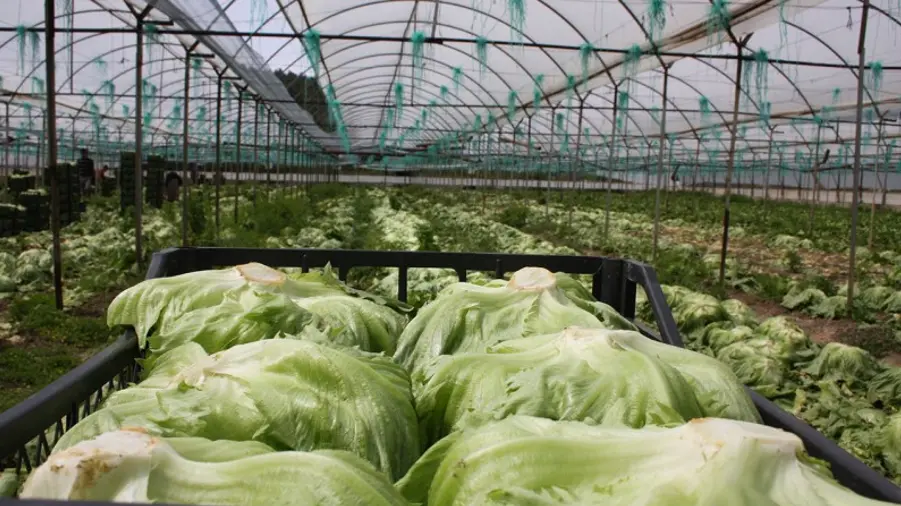
Some agricultural products are etched into memory by their names. Iceberg lettuce is one of them. Yet we know it not only for its crisp leaves but also for the "cold" story behind its name.
In the early 20th century, as agriculture in America was rapidly becoming commercialised, getting the lettuce grown on the plains of California to every corner of the country was a major problem. Refrigerated transport had not yet been developed at the time. The solution was found when growers thought of transporting the lettuce in train wagons filled with blocks of ice.
Thanks to this method, the lettuce stayed cool among the ice, kept its freshness and could reach much more distant markets. People who saw the ice-filled wagons approaching the railway stations began to shout, in a playful comparison, “The icebergs are coming!”
Over time, this expression became identified with the lettuce itself, and this is how the name "Iceberg lettuce", which we often see on supermarket shelves today, came about.
A Variety That Stands Out for Its Advantages
In fact, the name "Iceberg" refers not to a natural characteristic of the lettuce but to the logistical innovation developed around it. However, thanks to its layered, firm leaves, this variety is not damaged during transport and can stay fresh for a long time in the cold. This durability makes it well suited to cultivation in cool regions. It is also suitable for export to distant markets. It is an ideal product for supermarket chains and the food industry. With its neutral taste and firm texture, it is used in many recipes, from salads to sandwiches.
A Simple Idea, a Global Success
Iceberg lettuce is a successful example of innovation, logistics and market-oriented thinking in agriculture. A simple transport solution turned this type of lettuce into one of the leading players in the global market. Iceberg lettuce is a striking example showing that agricultural production needs to be planned not only around the soil but also together with logistics.