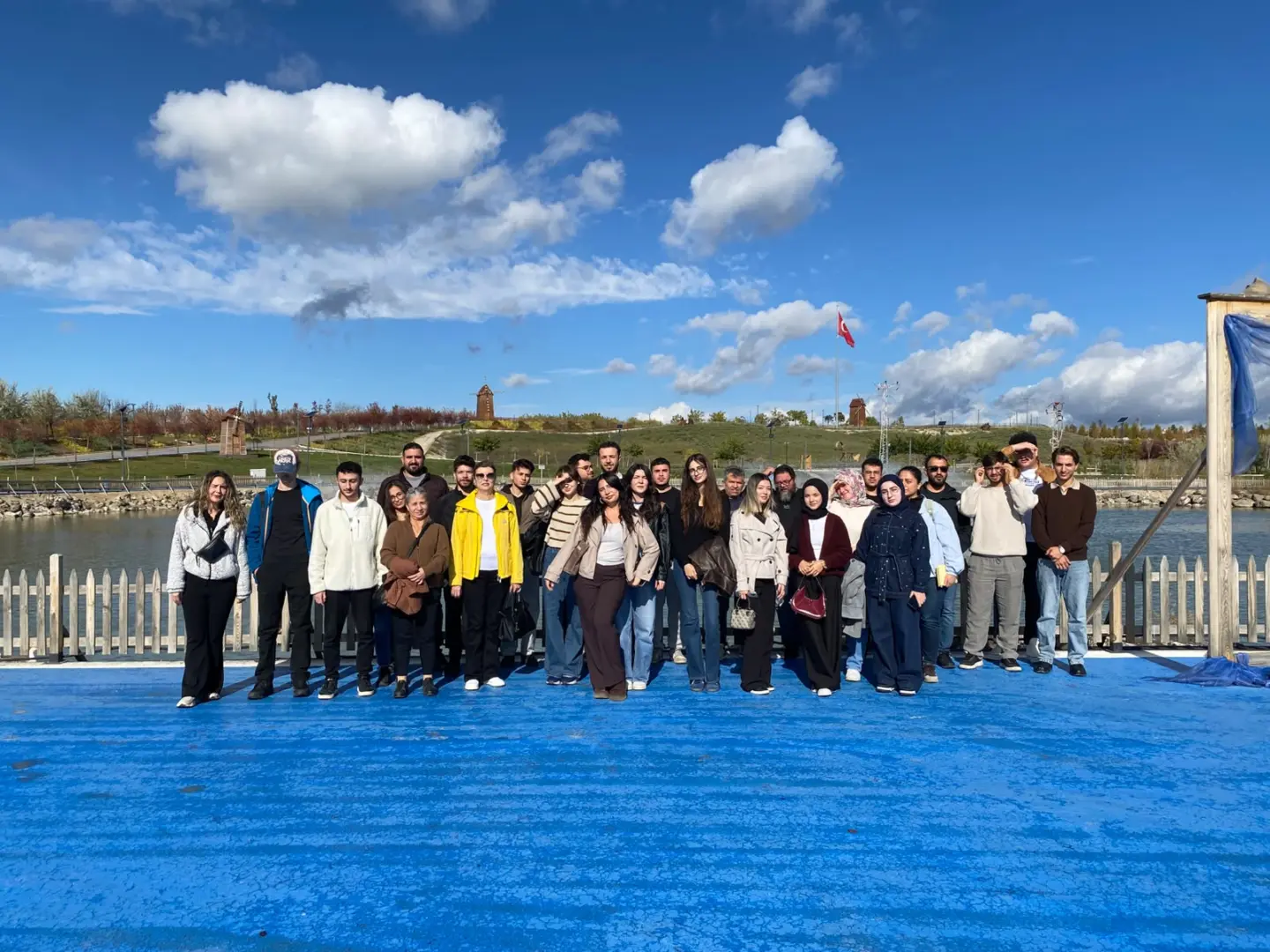
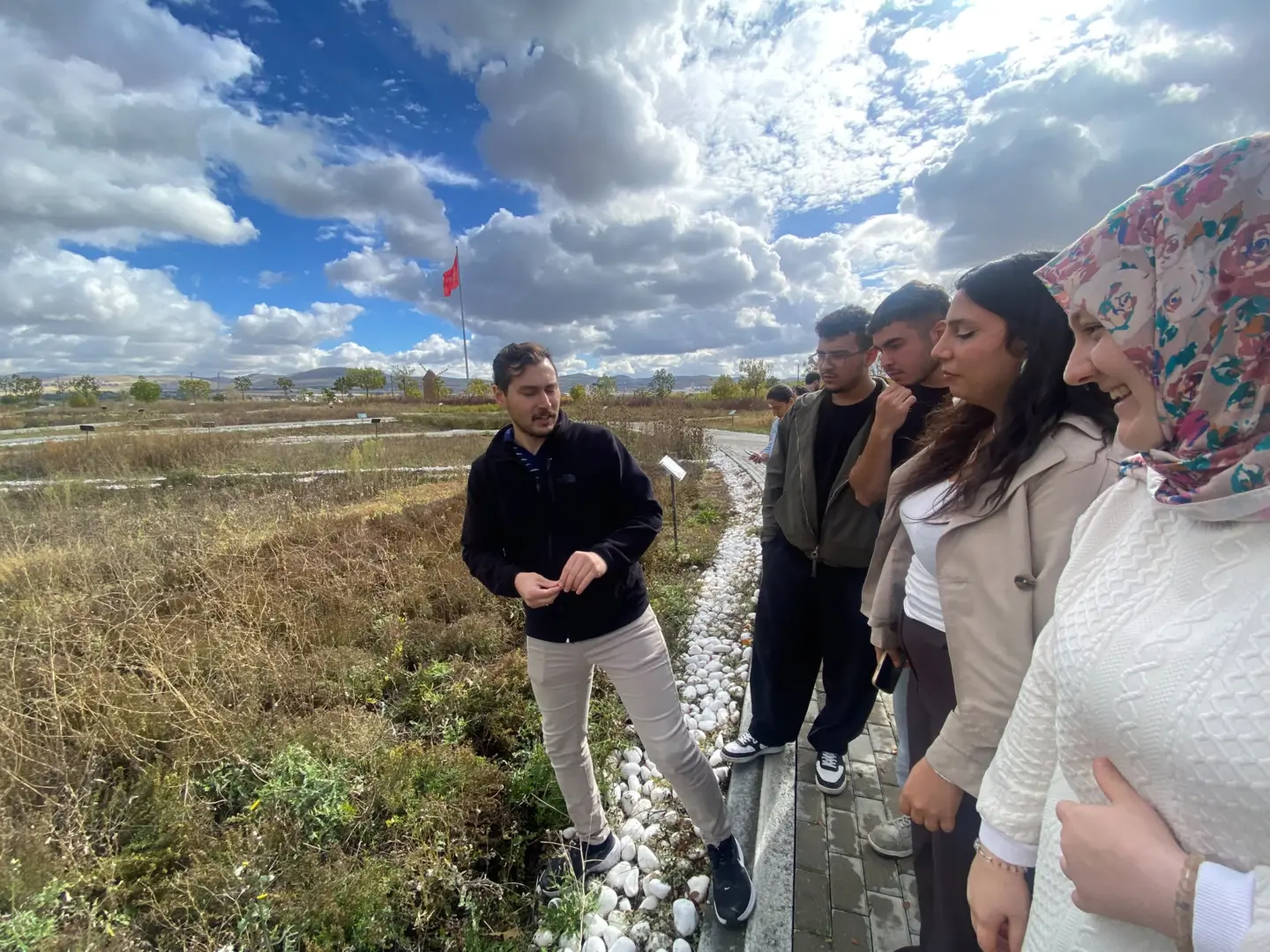
Within the scope of the “Precision Farming for a Greener Tomorrow: Advocating for Sustainable Agriculture” project, funded by the European Union, young farmers and agriculture faculty students visited the Agricultural Campus of the Ankara Metropolitan Municipality's Capital Ankara Development Project (Başkent Ankara Kalkınma Projesi, BAKAP) in Gölbaşı.
Established by bringing about 3.5 million square metres of idle land back into production, BAKAP brings together many practices, from cereal, vegetable and fruit production to lavender gardens, and from heirloom seed plots to ecological ponds. The visit began with a briefing at the premises of the Department of Rural Services. There, participants received information on production work and water management practices on the campus.
The most popular part of the programme was the Medicinal and Aromatic Plants Plot, where 75 species are grown. The young people examined plants such as lavender, thyme, valerian, yarrow and burdock up close, touching their leaves and trying to tell their scents apart. The growing conditions of the plants, their water and soil requirements, harvest periods and uses were explained in detail. It was emphasised that medicinal and aromatic plants, which need little water and are drought-tolerant, offer a strong alternative for producers under climate change conditions, as they can be turned into high value-added products.
In the second part of the visit, the water collection area and irrigation areas on the campus were examined. Participants were told how collecting and storing rainfall and surface water contributes to a sustainable supply of irrigation water and to reducing pressure on groundwater. The importance of supplying plants with water when they need it and in the amounts they need, for both yield and the protection of resources, was highlighted once again.
The young people said that seeing medicinal and aromatic plant cultivation and water management practices on site at a large-scale production area broadened their perspective on the future of agriculture.